Napster - AI Music & Experts
- 2.9
- Rating
- 10.00M
- Installs
- Free
- Price

 Analysis by App-foxy
I approached Napster - AI Music & Experts as a music and audio app rather than as a simple replacement for a radio station. Its central idea is unusual: it presents AI musicians as collaborators in live video. That immediately makes the experience feel more interactive than pressing play on a conventional playlist, but it also means the quality of the session depends heavily on the connection between the app, its video elements, and the listener.
In everyday use, I found it most interesting when I wanted music to feel like an activity instead of background noise. The app comes from Napster Music, Inc, is free to install, and is aimed at Teen users. It has been available since November 10, 2010, so it carries the name of a long-running music service while trying to explore a more modern, AI-focused format.
The important question is not simply whether it plays music. The better question is whether this live, collaborative presentation gives me something I would miss in a traditional streaming app. My answer is mixed but positive: it can make listening more engaging, especially in short mobile sessions, yet it is not automatically the best choice for people who only want a quiet, predictable playlist.
You May Also Like

 Blood Strike: 2.5 Anniversary
Blood Strike’s Loadouts Turn Every Drop Into a Tactical Gamble
A close look at Blood Strike’s custom loadouts: how fast access to signature weapons reshapes its battle royale rhythm, rewards preparation, and narrows the gap between fights.

 Pandora - Music & Podcasts
Pandora’s Music Is Easy to Start, but Harder to Recover
Pandora’s strength is its low-effort path from a seed to a station. Its weak spot is how much confidence it asks you to place in connection, setup, and quiet recovery.

 8 Ball Pool
 Is Built on Rivalries, Rematches, and Routine
A close look at the rivalries, rematches, shared routines, and unanswered safety questions that turn a quick pool match into a persistent mobile community.

 Samsung Music
’s Quiet Strength Is Playing What You Already Own
Its reach comes less from spectacle than from dependable access to a personal library. That simplicity is both the app’s strongest retention engine and its ceiling.

 AccuWeather: Weather Radar
AccuWeather Review: A Quick, Clear Forecast for Everyday Decisions
For everyday plans, the best forecast is the one you can understand quickly. AccuWeather makes rain timing, radar, and local conditions easy to act on, with a few trade-offs.

 Hill Climb Racing
Why Hill Climb Racing Still Turns Crashes Into One More Run
A tiny car, a bumpy hill and one more upgrade: Hill Climb Racing keeps resurfacing because its simple chaos makes every near-miss feel personal.
More From Our News Desk



How the connected experience changes listening
I find the connected format most useful when I treat a session as something to take part in, rather than as music I leave running unnoticed. That changes how I choose the moment, the network, and whether the screen deserves my attention. From there, the key question is how those pieces come together in an ordinary listening routine.
Live video makes the session feel more present
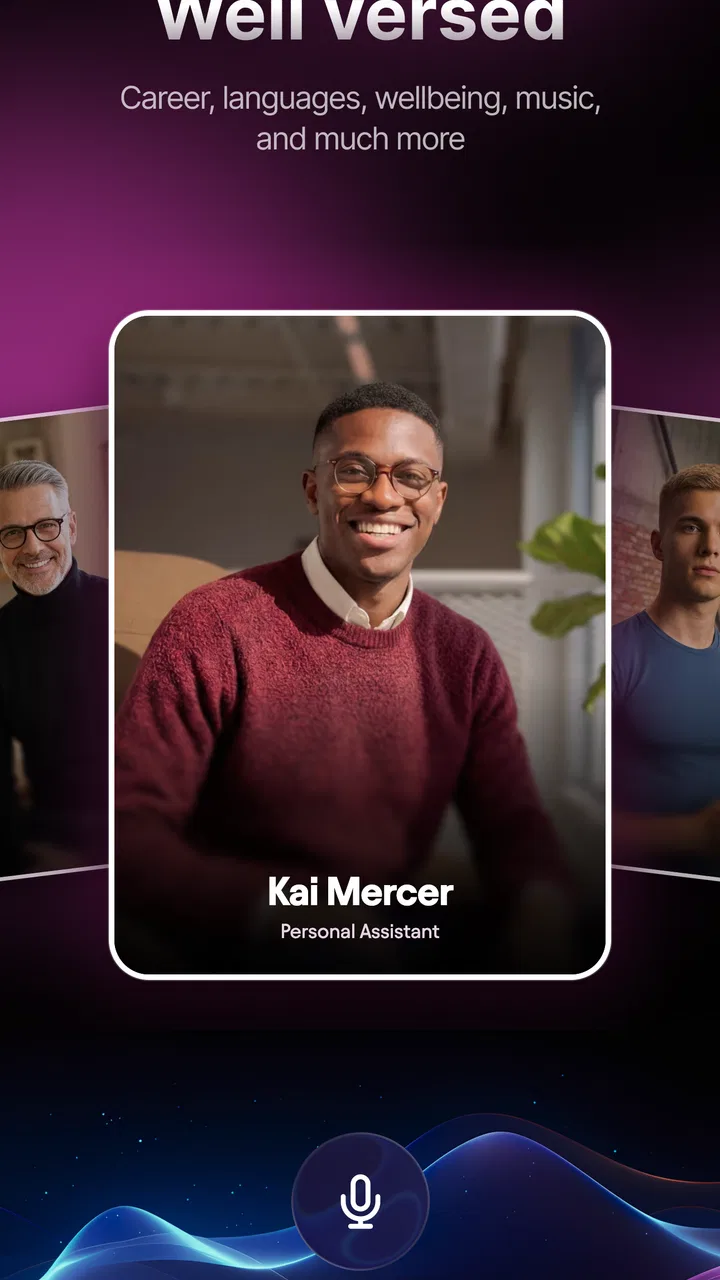
The defining appeal is the relationship between music and live video. Instead of treating the AI musicians as an invisible recommendation engine, the app puts them closer to the center of the listening experience. I found that this changes my behavior: I pay more attention to what is happening on screen, and I am more likely to experiment rather than start one album and leave the phone untouched.
That approach works well during a short break, while cooking, or when I want a musical prompt rather than a carefully planned queue. The visual layer gives the session a sense of occasion, even when I am listening alone. It is an especially good fit for curious listeners who enjoy seeing how technology reshapes familiar music habits.
There is a trade-off, though. Live video naturally asks more from a phone and a network than audio alone. If I am walking through an area with inconsistent reception, the experience can feel less dependable than a standard audio player. A conventional streaming service is usually easier to ignore in the background; this app makes the connection more noticeable because the visual interaction is part of its identity.
Why network quality matters more here than in ordinary audio apps
With a stable connection, the app feels much more coherent. The music and the visual presentation support each other, and the collaborative concept becomes easier to appreciate. When the network is busy or weak, the first thing I notice is not necessarily the song itself but the interruption in the flow of the session.
This is where expectations matter. I would not open it expecting the same calm reliability as a downloaded album or a basic local player. I treat it as a connected experience, best enjoyed when I have a reasonably steady network and enough time to let the session develop. That mindset prevents disappointment and makes the unusual format more enjoyable.
Useful mobile situations, and the ones I would avoid
On a phone, the app makes sense for moments when I can give it at least some attention. A commute with dependable reception, a relaxed evening at home, or a creative break are better situations than a rushed walk through a crowded area. I like being able to look at the screen occasionally and follow the live-video side instead of treating the phone as a locked audio source.
I would be more cautious during travel, in underground spaces, or anywhere I already know that reception changes quickly. A music app that depends on a continuous connection can become frustrating when the session repeatedly loses momentum. If my priority is uninterrupted listening in those places, I would choose a service and setup designed around already available audio rather than relying on a live presentation.
Another practical point is battery awareness. I do not leave the screen active for long periods unless the visual element is adding real value. For background listening, I reduce how often I interact with the display and avoid treating the video component as something that must remain in front of me. That preserves the app’s strengths without turning every listening session into a screen-heavy activity.
A realistic day-to-day workflow
Imagine having twenty minutes before an appointment. I would open the app while connected to a reliable network, start a session, and use the live-video interaction as a way to discover something rather than spending the entire break searching through menus. If the connection remains steady, the format can fill that small window with more personality than a random shuffle.
If the appointment runs late and I move into a poor-reception area, I would not keep fighting the app. I would switch to another listening option and return later. That is not a criticism of the concept so much as a realistic boundary: this is most rewarding when the network is cooperating and I can give the experience a little attention.
What happens when the connection fails
Connectivity problems are more disruptive here because the app’s identity combines audio, video, and collaboration. A brief interruption can break the feeling that I am participating in a live session. In a normal music player, a delay may be easier to overlook; here, it can make the experience feel paused or incomplete.
My preferred recovery routine is simple. I first wait briefly instead of repeatedly tapping controls, because rapid retries can make it harder to tell whether the problem is temporary. If the session does not recover, I close the current activity, check whether the phone has moved between networks, and reopen the app only after the connection appears stable. This is less glamorous than the AI concept, but it saves time.
I also avoid judging the entire service from one bad moment in a crowded network. The more useful test is whether it behaves consistently across several ordinary sessions. If interruptions happen repeatedly on a connection that works well for other audio services, then the app may not suit my particular routine. That is the point at which a simpler alternative becomes the sensible choice.
How to be careful with mobile data
Because live video is part of the experience, I would use it thoughtfully on a limited mobile plan. I prefer starting sessions on a trusted Wi-Fi connection when I expect to listen for a long time, and I avoid leaving the app running while I am not actually paying attention. The main saving habit is not complicated: use the visual side when it improves the session, then stop the session when the phone is going back into my pocket.
I would also watch how the app fits into my broader monthly usage rather than assuming that a short test tells the whole story. A few brief experiments may be harmless, while frequent long sessions can create a very different data pattern. The app is better suited to intentional listening than to careless, all-day background playback when every megabyte matters.
This is one area where a traditional audio-first service may be more convenient. If I want music during a long journey and need to minimize network activity, I would favor an option whose main purpose is straightforward audio access. Napster’s live-video concept is more distinctive, but distinctiveness can come with a higher practical cost in connectivity and attention.
Who will appreciate the AI collaboration idea
I think the app is aimed at listeners who enjoy novelty and want technology to participate in the musical experience. If I like exploring unusual formats, watching a visual performance while listening, and giving an AI-driven music concept a fair try, I can see the appeal. It is also a reasonable option for people who become bored with passive playlists and want a session to feel more conversational or performative.
The store summary describes AI musicians that users actually collaborate with in live video, and that is the right way to understand the product. I would not reduce it to another catalog of songs. The collaboration angle is the reason to install it, while the music itself is the reason to decide whether to stay.
On the other hand, I would skip it if I want a minimal interface, dependable background audio, or a listening routine that does not depend on a strong connection. People who dislike screen activity while listening may also find the visual emphasis unnecessary. Likewise, anyone comparing services mainly by the depth of a familiar music library should evaluate the actual listening experience rather than assuming the Napster name alone answers that question.
Where the free model fits
The app is free to install, which makes trying the idea relatively easy. That is valuable here because the concept is more experimental than a normal music player: reading about AI musicians and live video cannot tell me whether I personally enjoy spending time with them. I would test it during several different network conditions before deciding whether it belongs in my regular rotation.
There are in-app purchases ranging from $1.99 to $489.00 per item. That is a broad span, so I would pay close attention to each purchase screen and avoid assuming that installing the app means every part of the experience is included at no cost. For me, the sensible approach is to explore the free entry point first, understand what I actually use, and only then consider whether any optional purchase adds enough value.
The app’s average rating is 3.3 from around 166 thousand ratings, with about 60 thousand written reviews. I read that as a sign to keep expectations measured. The idea is distinctive enough to attract interest, but the overall experience may not satisfy everyone equally, particularly users who expect a conventional streaming workflow.
How it compares with familiar alternatives
Compared with a standard music-streaming app, Napster’s strongest difference is not simply the presence of songs. It is the attempt to make AI musicians and live video part of the listening relationship. A conventional service is usually better when I already know what I want, need a predictable queue, or want to keep the phone out of sight.
Compared with a radio-style app, this one feels less like passive discovery and more like an interaction. Radio is convenient when I want someone else to maintain the flow. Napster is more appealing when I want to explore the idea itself and see whether collaboration changes my mood or attention.
Compared with a local audio player, the difference is even clearer. A local player wins for reliability, low distraction, and situations where the network cannot be trusted. Napster wins only when its connected presentation is the feature I am looking for. I would not replace every music tool with it; I would use it as a more experimental companion.
Small habits that improve the experience
I get better results when I decide in advance what kind of session I want. For focused listening, I keep the live-video element visible and give the collaboration a chance to shape the mood. For background sound, I use it more sparingly and stop the session when the visual side is no longer useful. This avoids paying the connectivity and battery cost for a feature I am not actually using.
I also test the app in the place where I expect to use it most. A smooth home session does not guarantee the same result during a commute, and a poor first attempt on a crowded network does not necessarily represent every situation. That simple test helps me decide whether the app belongs in my daily routine or only in occasional, connected listening sessions.
Finally, I keep purchase decisions separate from curiosity. The unusual concept is worth exploring, but novelty alone is not a reason to spend. I would first identify whether the app changes how I listen in a useful way, then judge any optional purchase against that actual benefit.
My connectivity verdict
Napster - AI Music & Experts is most convincing when I have a stable connection, a little time, and genuine interest in an interactive music format. Its live-video approach gives it a personality that ordinary playlist apps do not have, and the AI collaboration idea is specific enough to justify trying it rather than dismissing it as another audio catalog.
Still, I would not recommend it as the only music app on a phone. The connected design can make weak reception more disruptive, and the visual emphasis is not useful for every listening situation. If I need dependable audio during travel, want the lowest possible distraction, or prefer a carefully controlled library, another option will probably serve me better.
For curious listeners, the free installation makes experimentation worthwhile. I would begin on a reliable network, keep an eye on data use, test the recovery experience, and decide based on repeated sessions rather than the novelty of the first launch. With those expectations, Napster - AI Music & Experts feels like an interesting specialist app: not a universal replacement for familiar music services, but a distinctive way to make listening feel more active and visually connected.
FAQs for Napster - AI Music & Experts
01What features does Napster - AI Music & Experts offer?
Napster - AI Music & Experts offers a vast library of music tracks and playlists curated by AI and music experts. The app provides personalized recommendations, offline listening, and high-quality audio streaming. Additionally, users can access live sessions and interviews with artists, enhancing the overall music experience.
02Is Napster - AI Music & Experts available for both Android and iOS?
Yes, Napster - AI Music & Experts is available for download on both Android and iOS platforms. Users can find the app in the Google Play Store for Android devices and the Apple App Store for iOS devices, ensuring wide accessibility across different mobile operating systems.
03How does Napster’s AI feature enhance the music listening experience?
The AI feature in Napster analyzes your listening habits and preferences to provide highly personalized music recommendations. By understanding your music taste, it curates playlists and suggests new artists or tracks that align with your interests, making your listening experience more tailored and enjoyable.
04Can I listen to music offline with Napster - AI Music & Experts?
Yes, Napster allows you to download your favorite tracks and playlists for offline listening. This feature is particularly useful for users who want to enjoy music without using data or in areas with limited internet connectivity, ensuring uninterrupted music access at any time.
05Does Napster - AI Music & Experts offer any unique content?
Napster provides unique content such as exclusive artist interviews, live streaming sessions, and expert-curated playlists. These features offer users insights into the music industry and access to content that is not available on other platforms, enriching the overall user experience.
Pros
- Extensive music library available.
- User-friendly interface design.
- Personalized playlists enhance experience.
- Offline listening option is available.
- High-quality audio streaming.
Cons
- Subscription required for full access.
- Ads in the free version can be intrusive.
- Limited social sharing features.
- Some songs may not be available offline.
- Requires constant updates for new features.

Napster - AI Music & Experts
Gallery